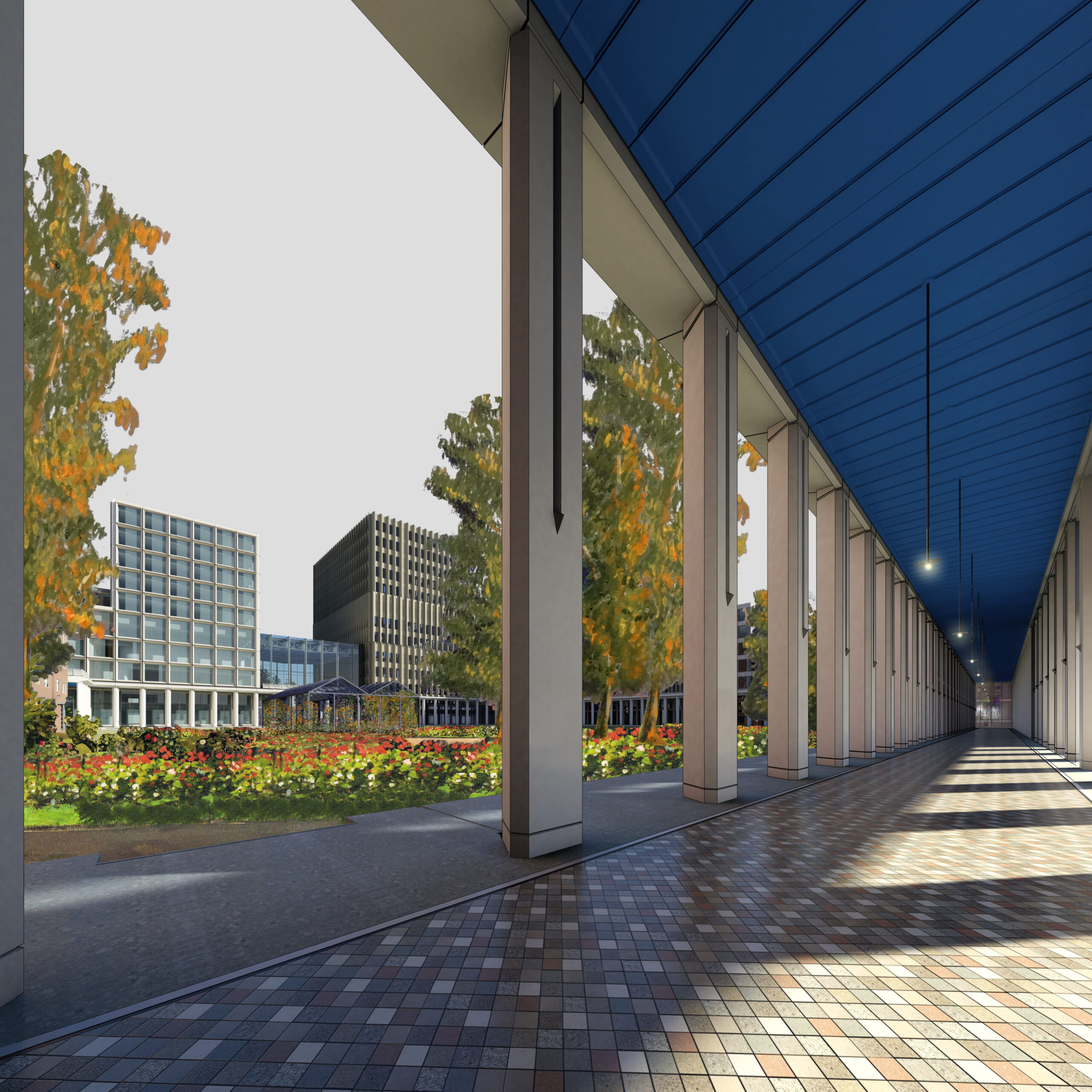
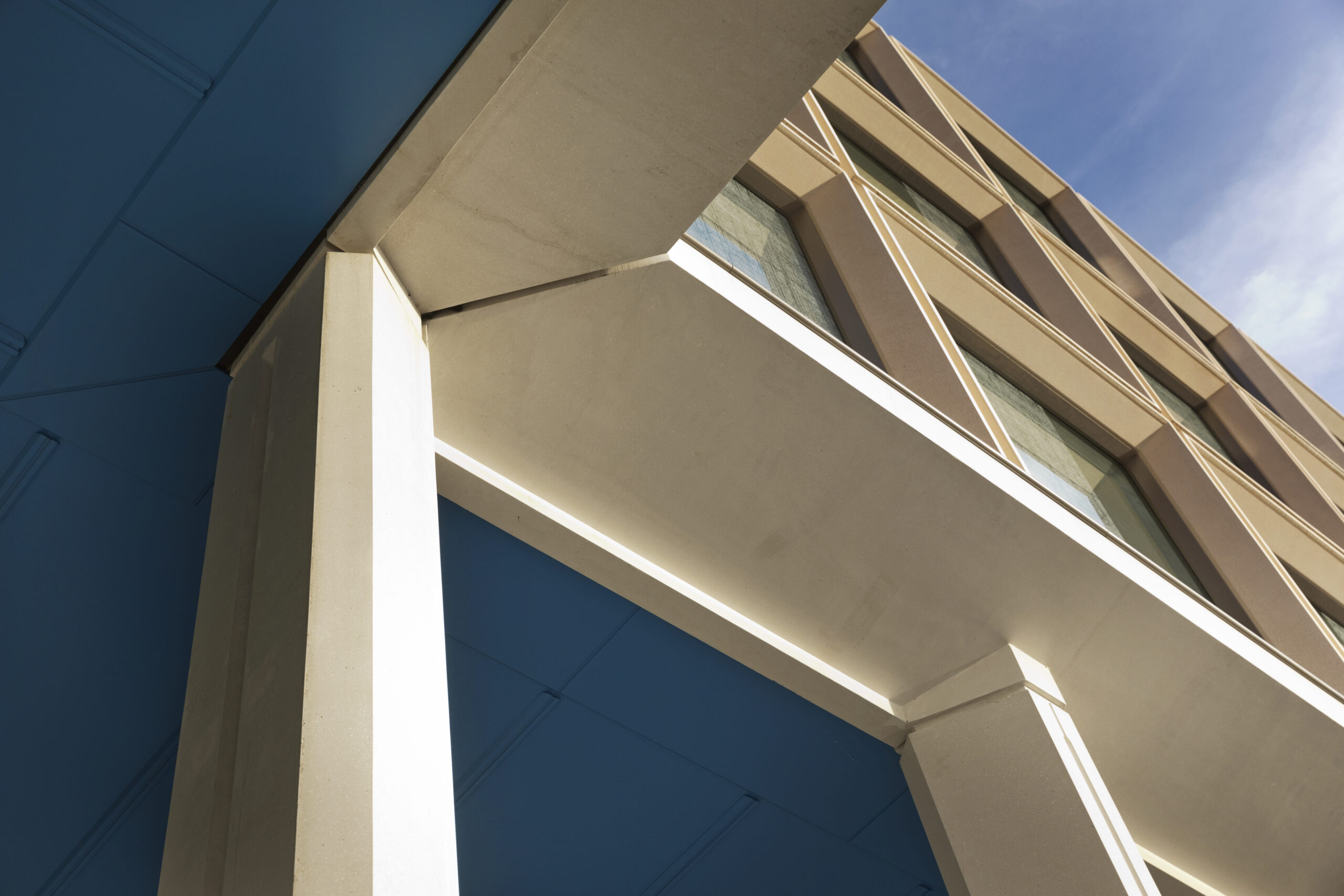

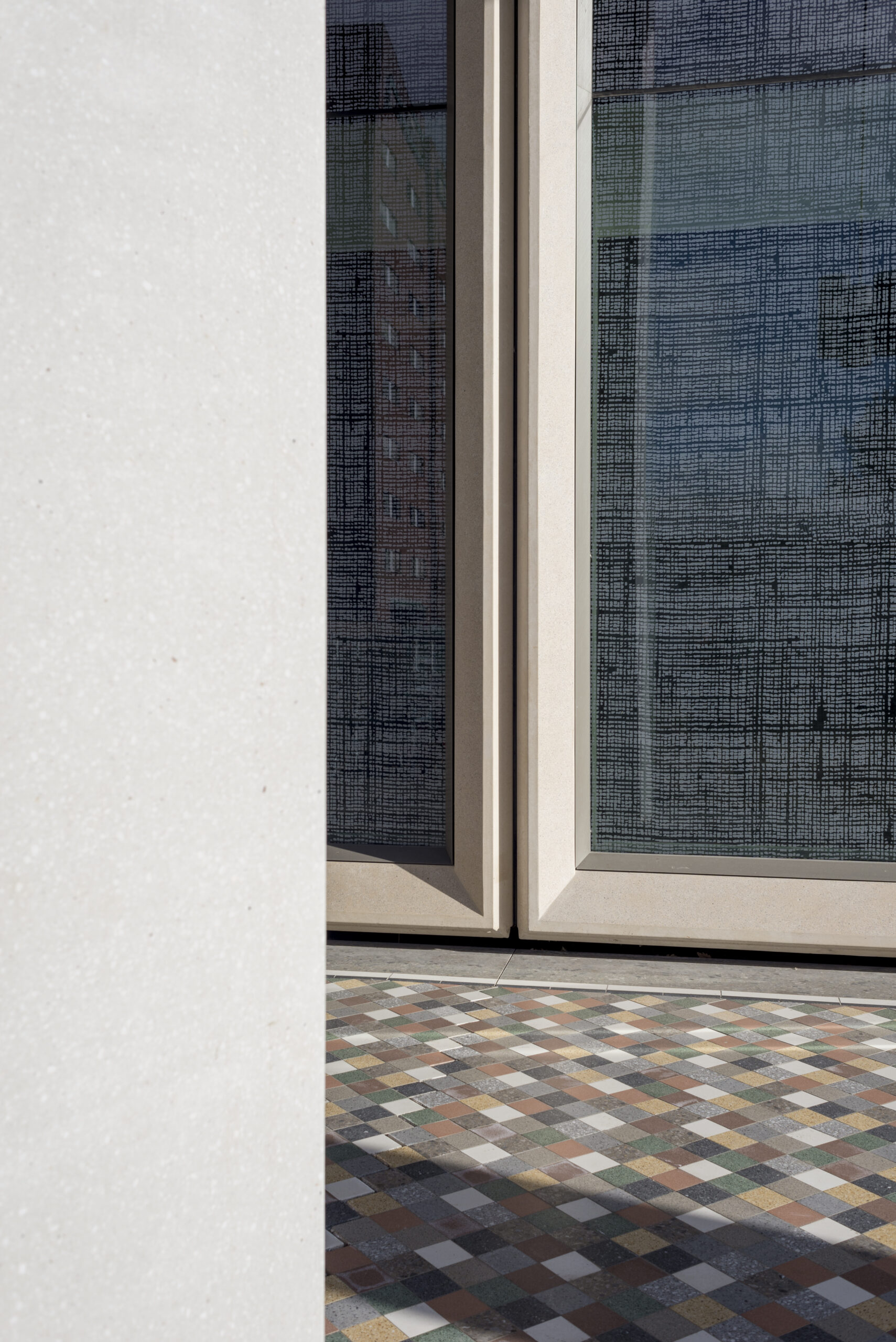
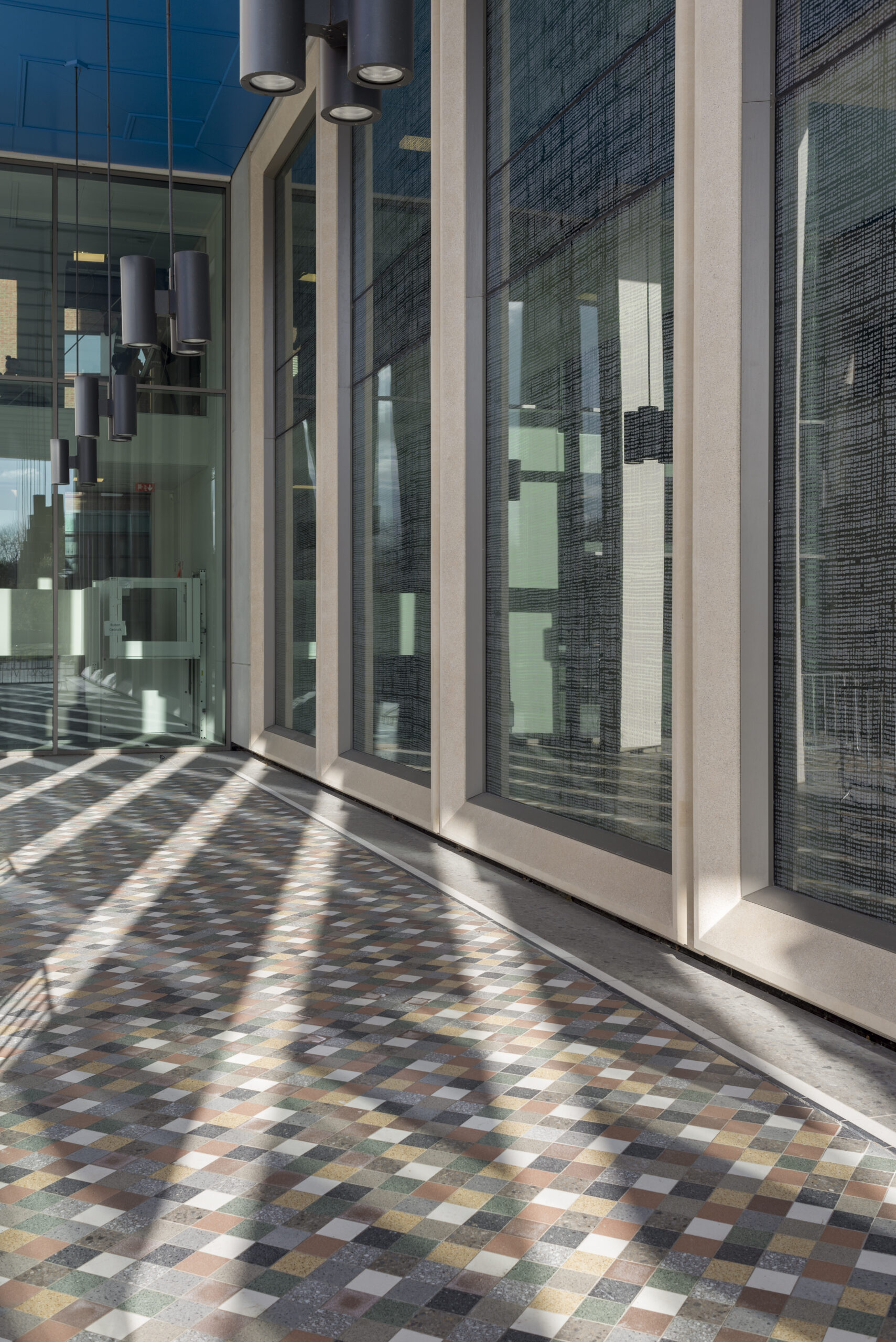

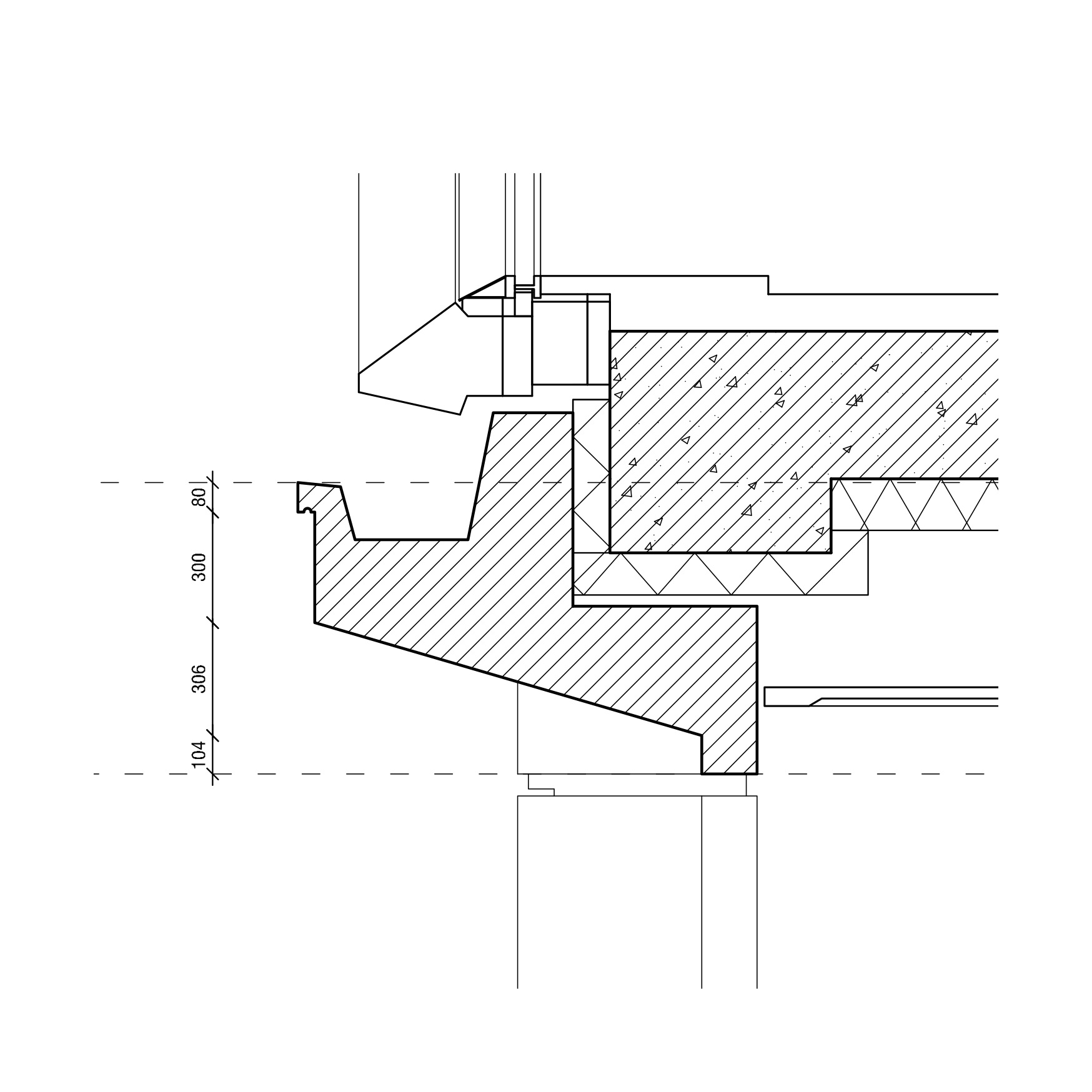
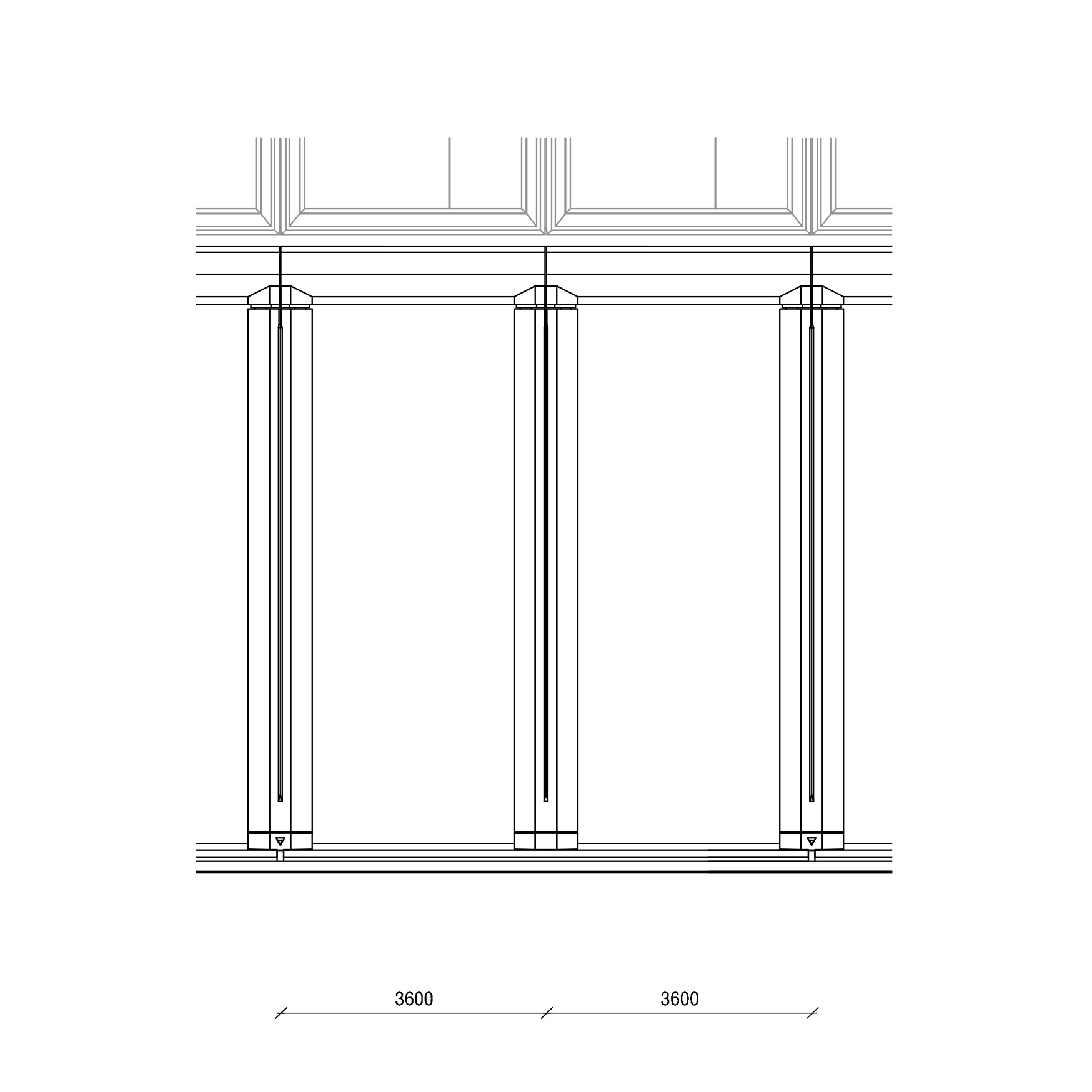
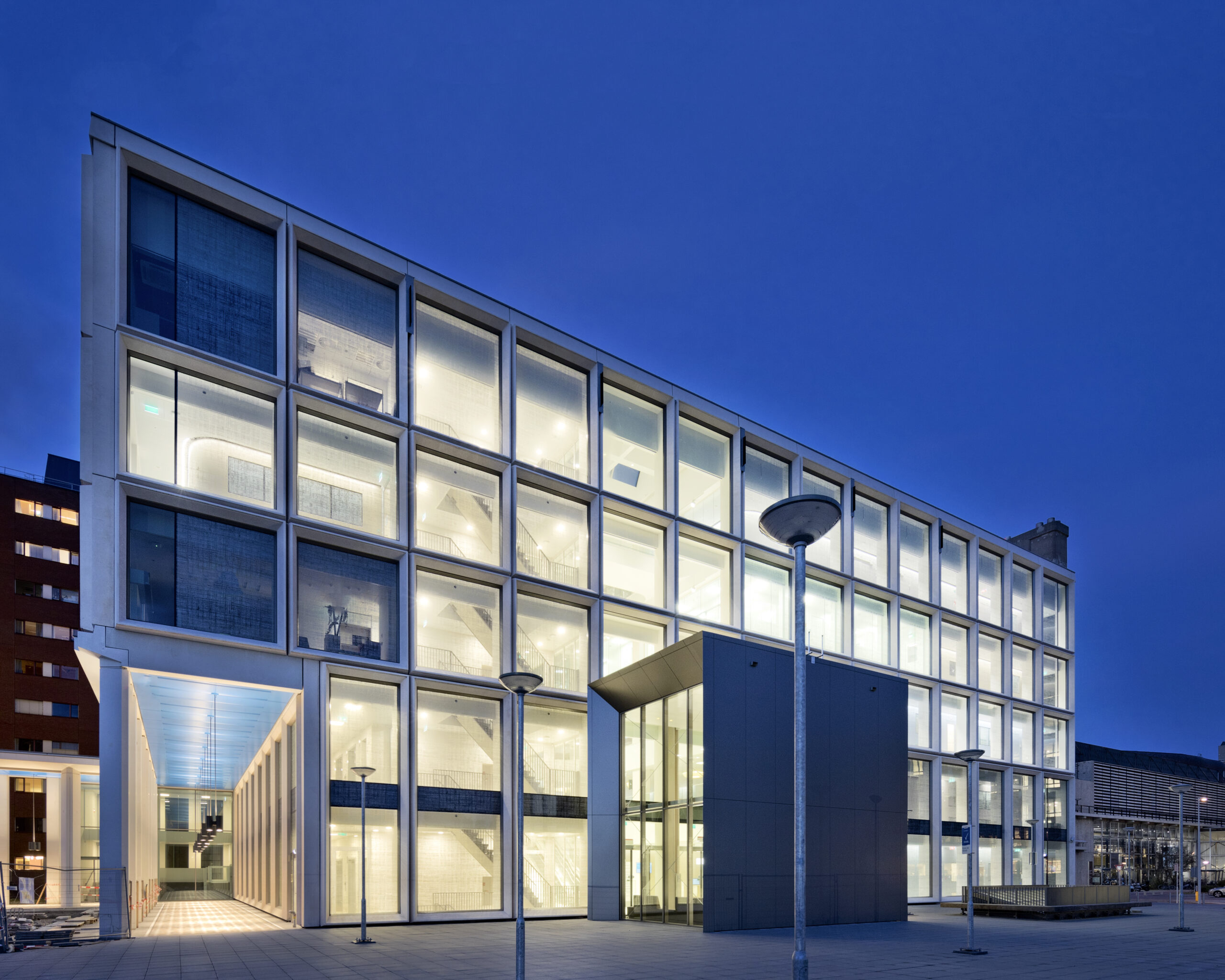
Around the Botanical Garden Zuidas, a rhythmic row of columns threads the various surrounding buildings together. A bright staccato of white lines supports a border beam over which the sand-coloured facades gaze at the greenery. Behind the columns hides a colonnade along which patients, visitors, and staff move between the buildings and around the greenery. The Colonnade and the Botanical Garden are the most significant focal points within Amsterdam UMC. These are places with a sheltered character that escape the direct logistics of the hospital. Cherishing life, especially when it is under pressure.
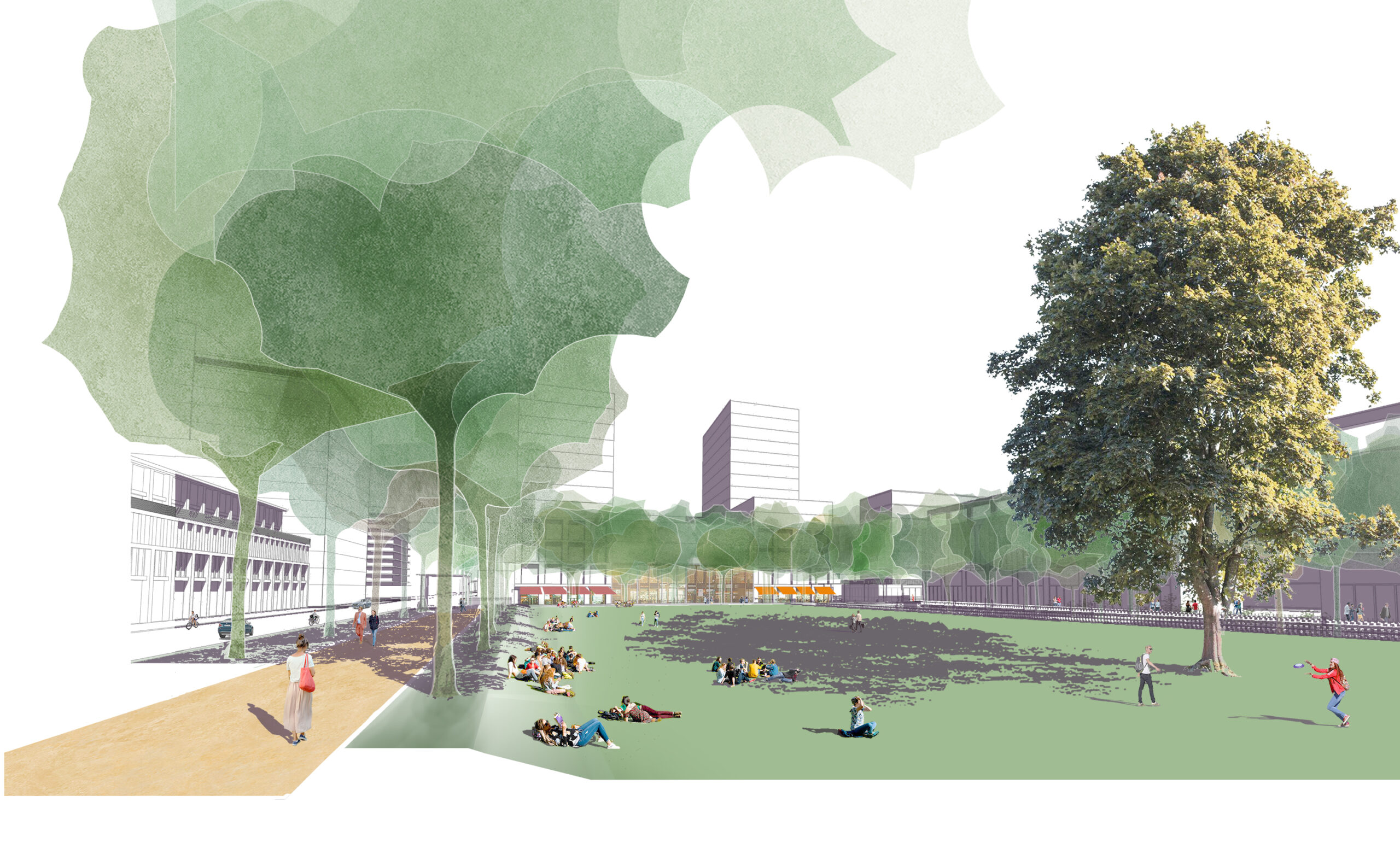
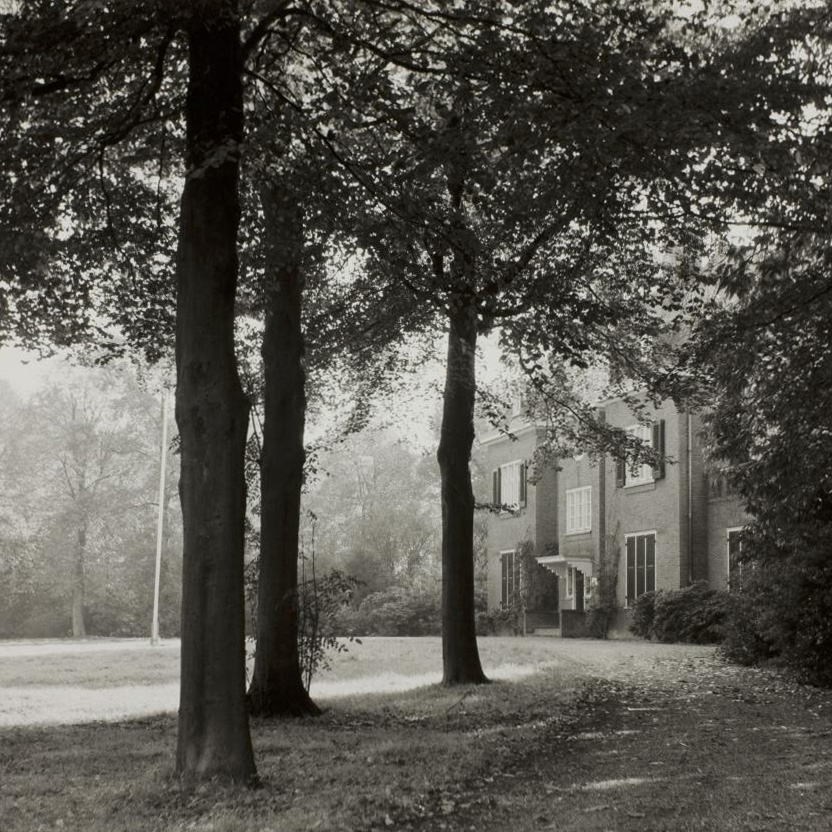
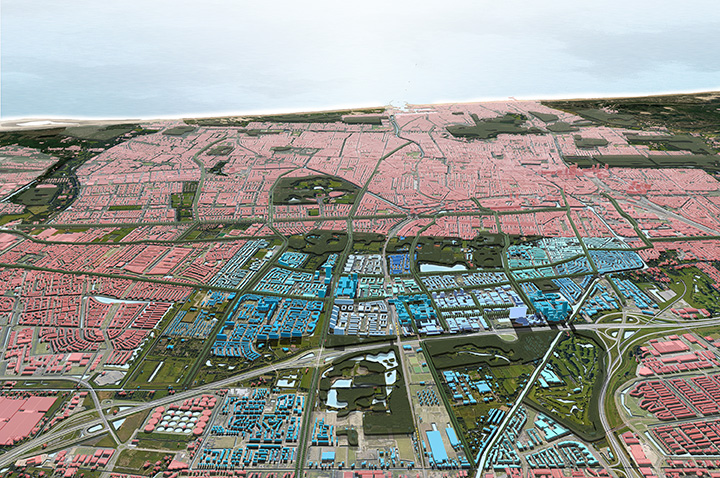
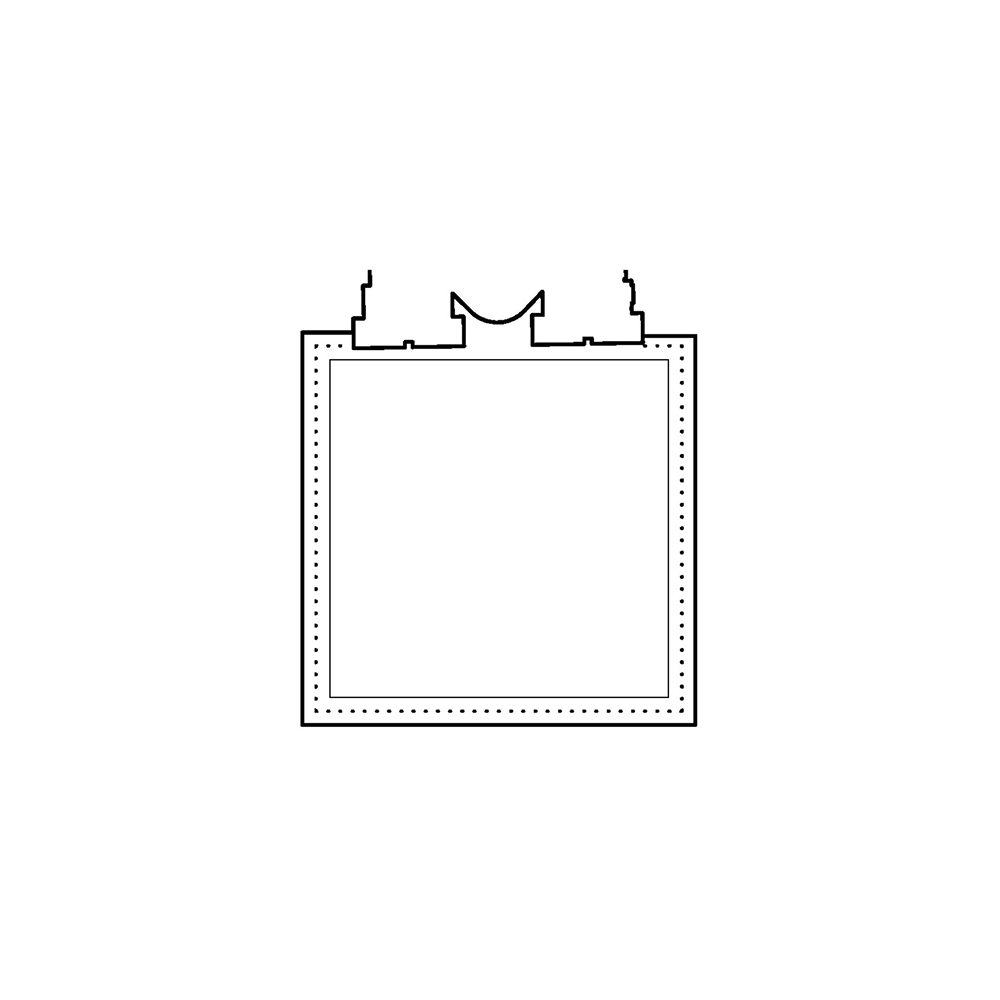
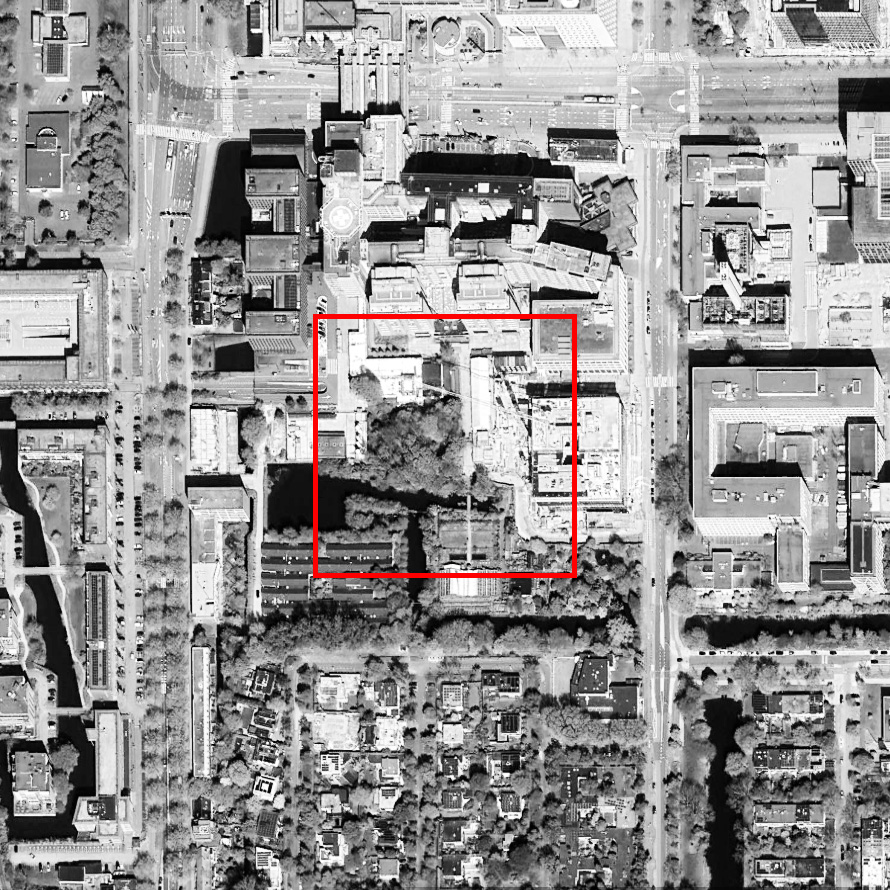
According to the urban Masterplan, the buildings of Amsterdam UMC, once located outside in the fields, will now become part of the cosmopolitan environment of Zuidas. As a counterbalance, a large garden of 100x100m is saved in the heart of the buildings. It is reminiscent of Nietsche’s words from 1882: “One day, and probably soon, there will be a need for what our big cities lack above all: quiet and spacious expanses for contemplation, places with high long colonnades for bad or too sunny weather […]. We want to see ourselves translated into stone and plant, we want to walk in ourselves when we walk in these gardens and halls.”
A meaningful space
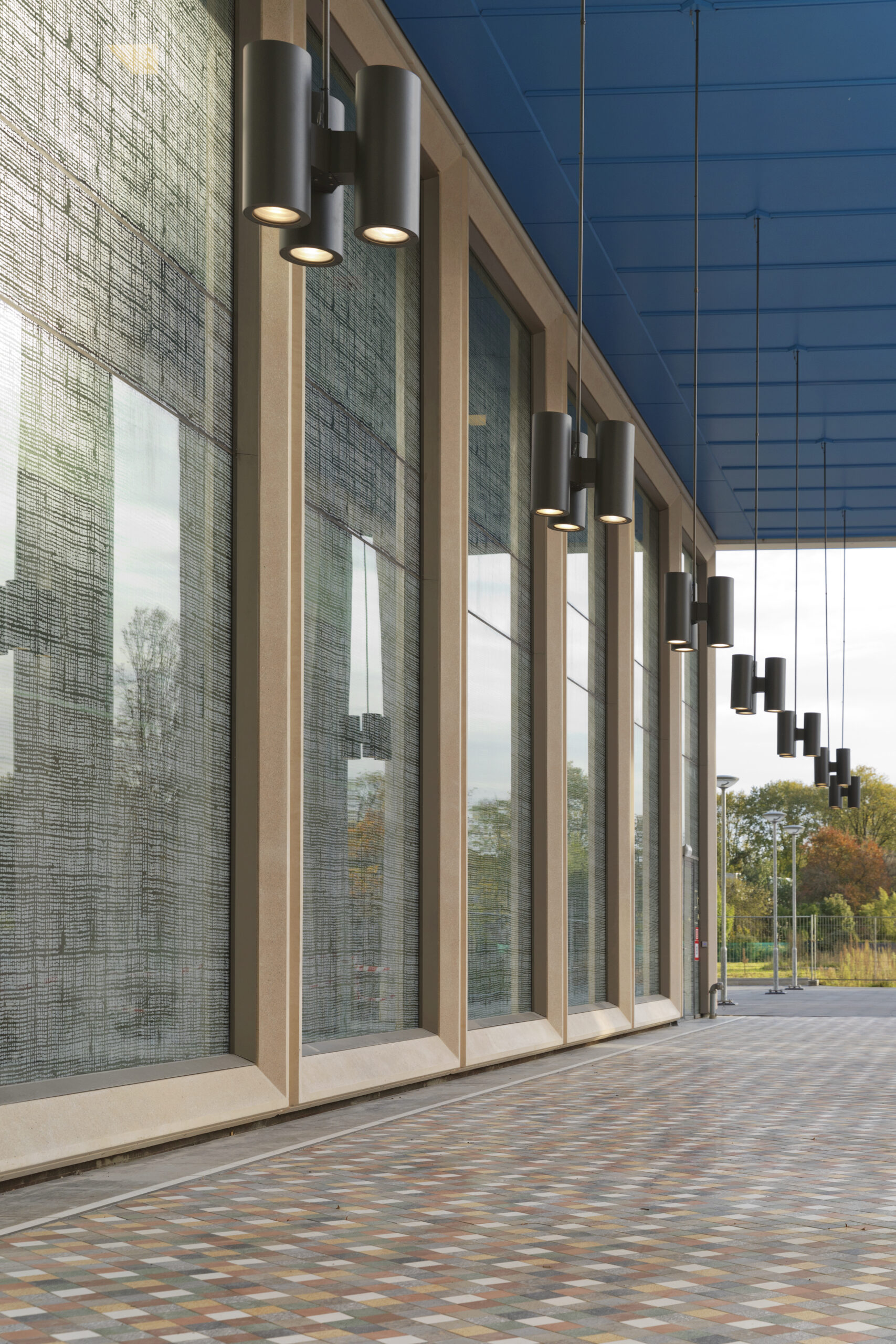
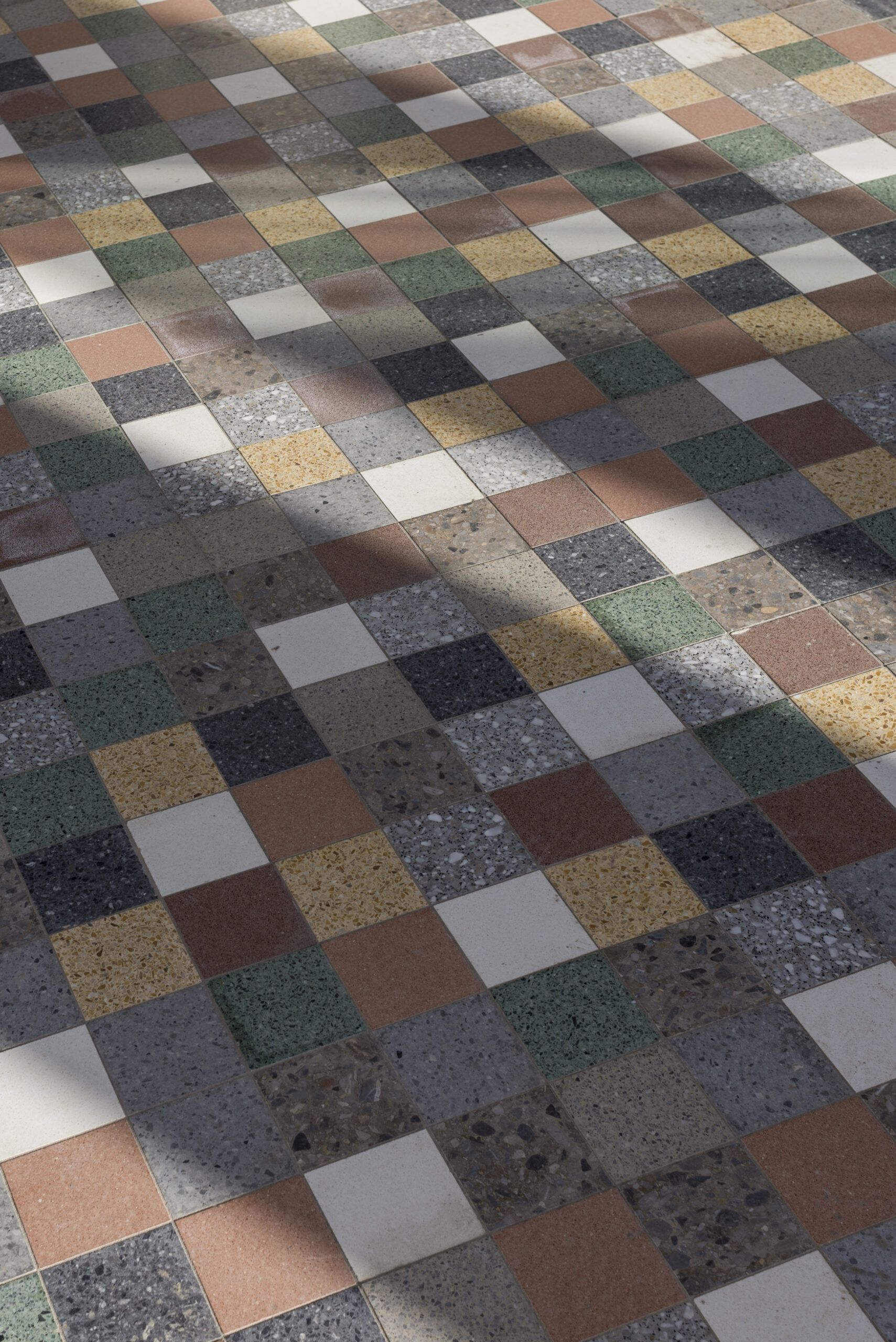
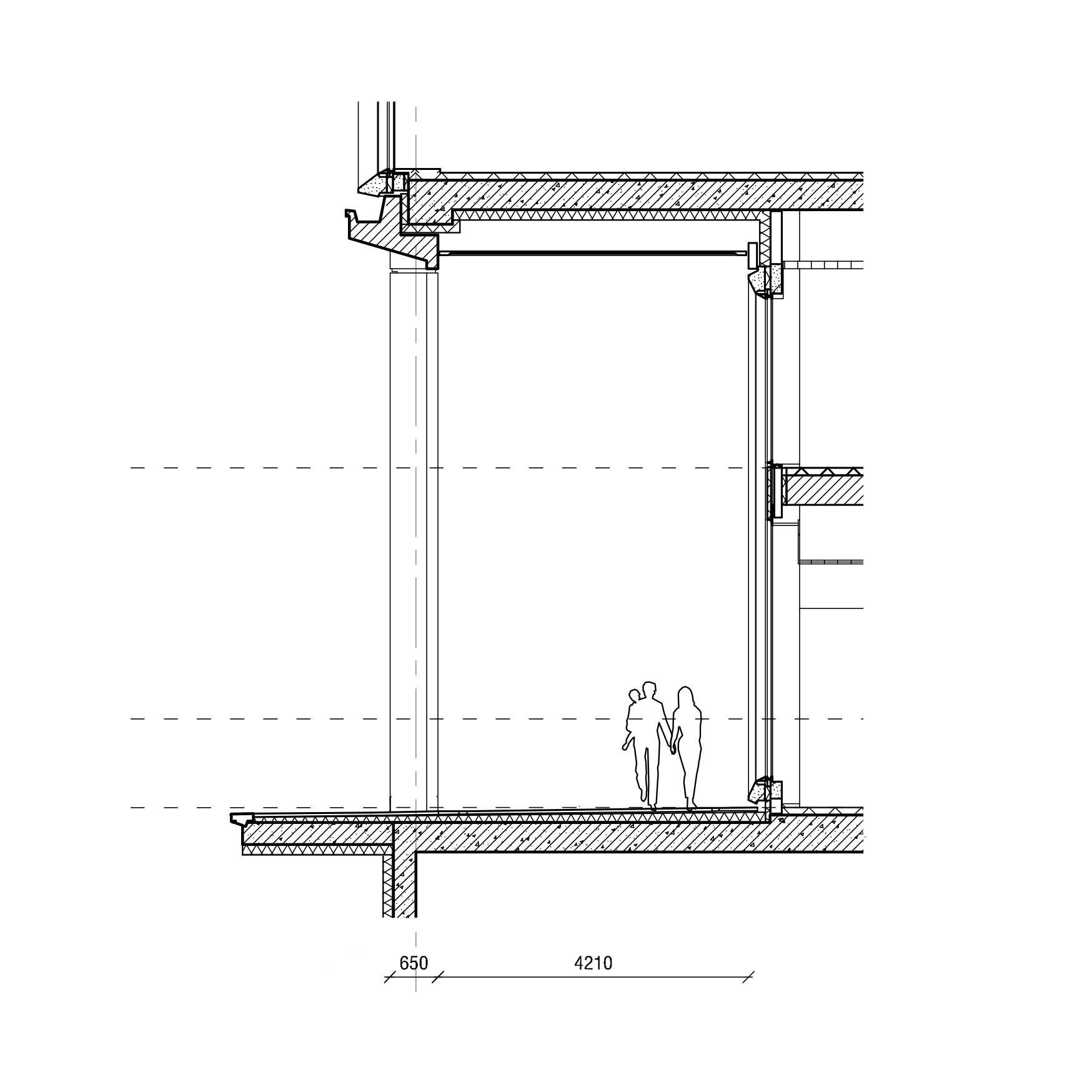
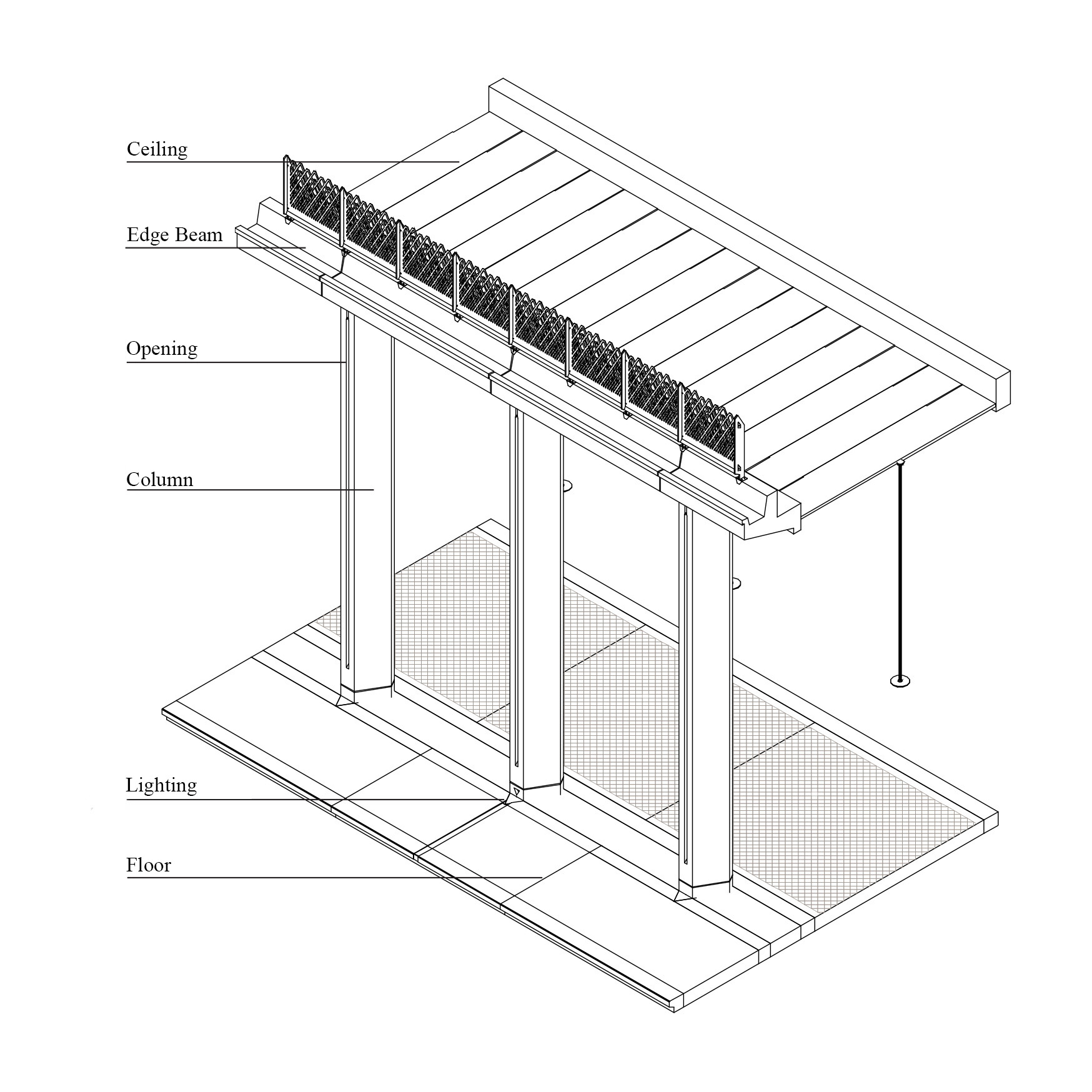
The shelter of a colonnade has been cut out over two floors from the buildings that border the courtyard garden. A tall space with a lively diagonal tile pattern. The multitude and multitude of colors symbolizes the diversity of people. The heavy nature of the floor connects the Colonnade to the earth and many footsteps taken by predecessors. An order is recognizable by a subtle grid of white tiles. The floor is therefore in clear contrast to the light and heavenly character of the ceiling. A radiant certainty and sign of hope like Giotto’s ultramarine in his Scrovegni Chapel with lighting on pendants.
The Colonnade as Gesamtkunstwerk
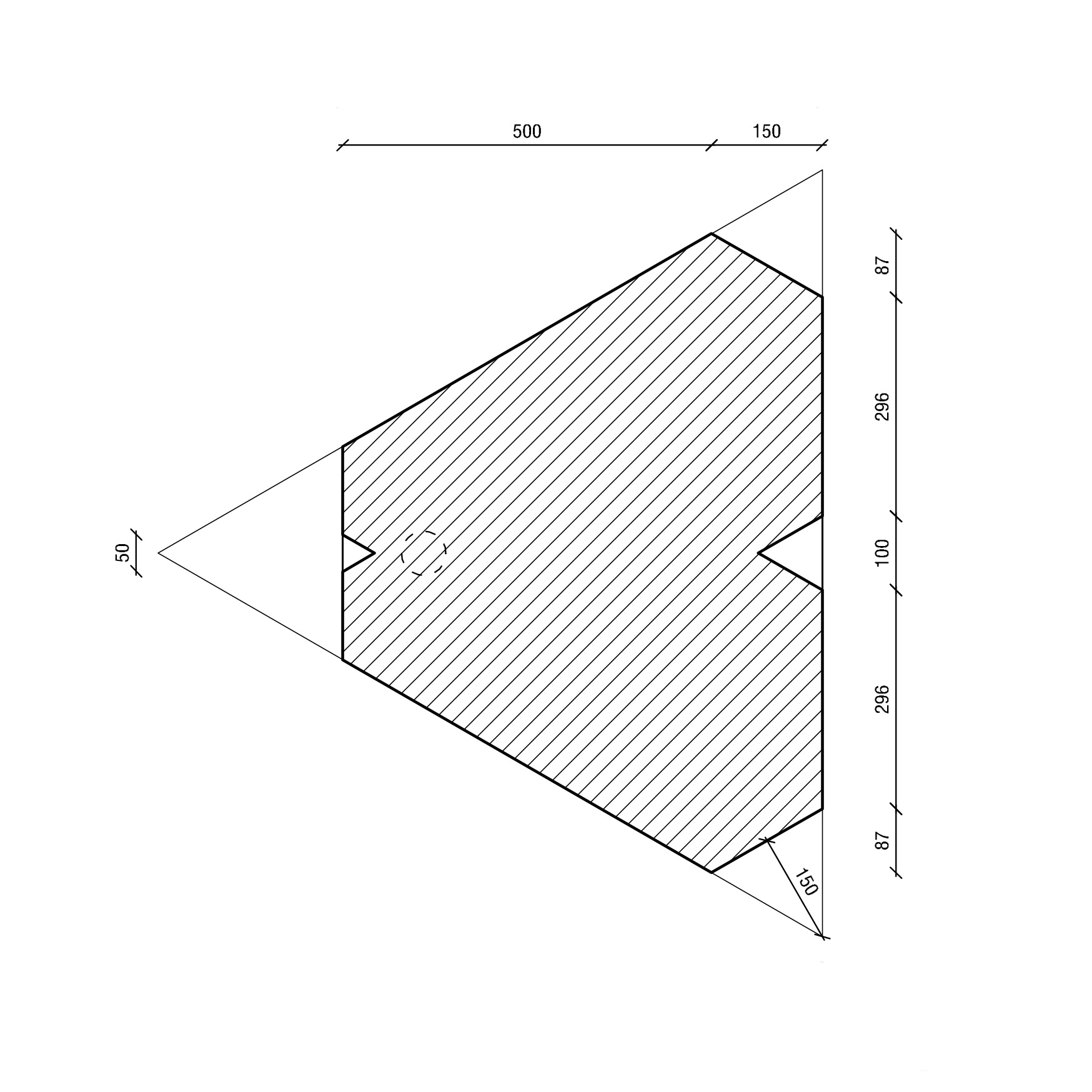
The whole of the Colonnade lays about 25cm above the level of the garden. This becomes tangible in the part of the floor that lies outside the columns. Here the difference in height is bridged by a staircase and small ramps. Through small gutters that flow from the columns, the garden is irrigated with the façade water collected in the edge beam. Floor, ceiling and lighting give substance to the architectural structure of columns and beams, which in turn form part of the primary supporting structure of the buildings above. With a fixed center-to-center size of 3.6m, buildings with a multiple of that can rely on this.
These elements are not placed ‘cold’ on top of each other, but are connected to each other by means of continuous joints and lines, so that a coherent whole is created, in which the individual parts remain recognizable. A margin or joint is also taken into account at the transition to the adjacent buildings, so that the Colonnade is continuous in all its purity and strings the different buildings together like a string of beads.
Multi-level structuring element
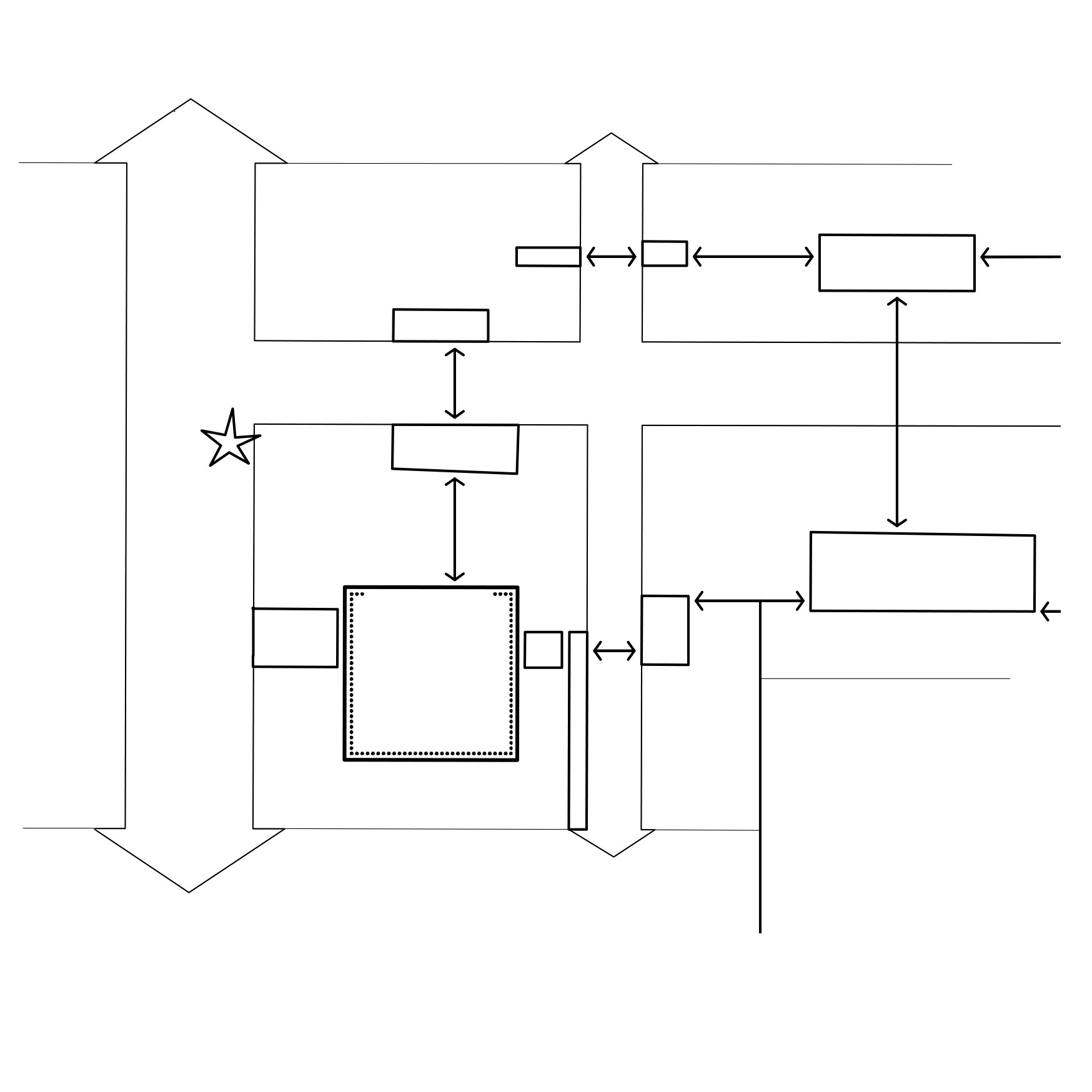
Within the Master Plan, the colonnade is a structuring for future developments. Namely, a ring-shaped corridor structure over three layers in which the logistics of the hospital are organized. Patients and employees, visitor and goods flows are each integrated into this ring structure at their own level. The various buildings of Amsterdam UMC are then located on this ring road. This is a reversal of the previous finite growth model, in which the building mass has continued to expand from the centre. In addition to the colonnade for patients, visitors and employees on the 0 level, a logistics route has been installed at -1. At +1, on the inner façade of the Colonnade is the bed corridor that sets out a circular walk via the shortest line, and always with daylight and a view around the enclosed garden. Existing trees, a glittering water feature, a greenhouse and part of the botanical collection will be given a place here. The dozens of volunteers move with the Botanical Garden. A green opulence within the highly urbanized Zuidas is part of the varied network of pedestrian streets and urban squares.